
GRAPH - Productivity, Jobs, and the Ecological Transformation in Brazil
Labor productivity and output growth are central to designing inclusive and sustainable economic policies. For developing countries, especially amid the twin transitions of climate change and digitalization, ensuring access to decent work is not just a social priority, it’s an economic imperative.
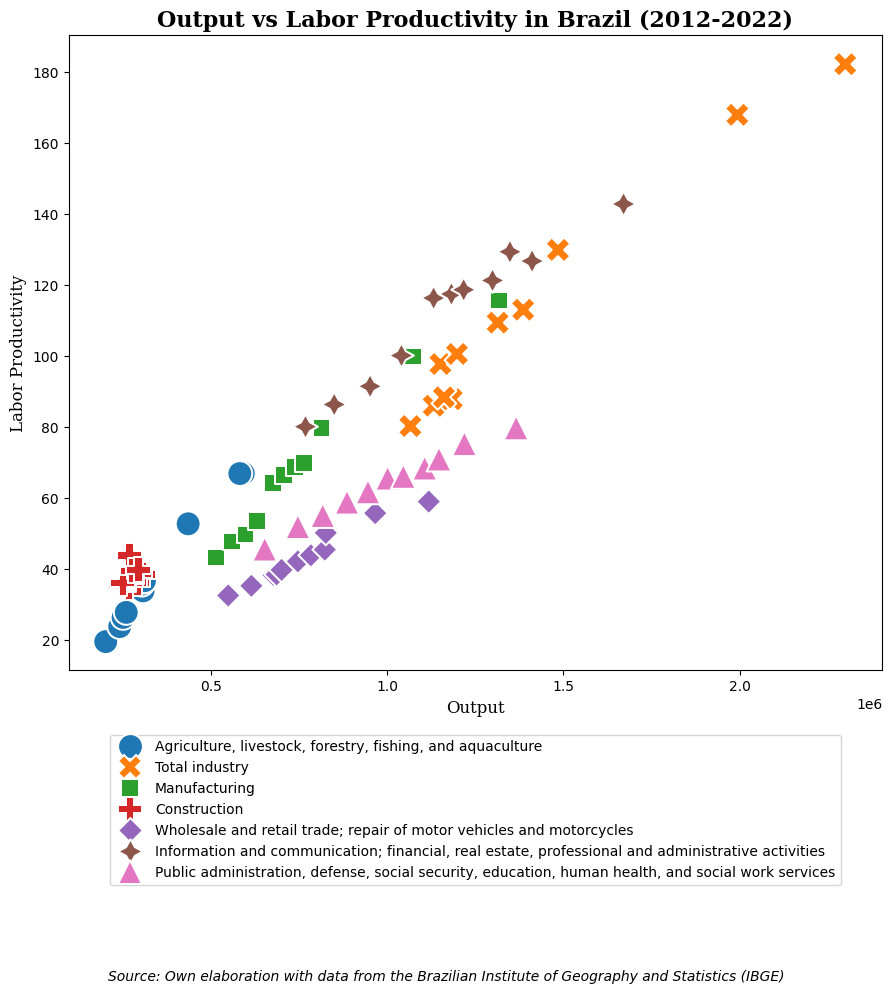 Graph of the Month May 2025
In Latin America, persistent structural challenges such as high informality, underutilized human capital, and low labor productivity continue to hamper inclusive growth. Without active policies that promote “dynamic sufficiency1”, the integration of the labor force into productive and future-ready sectors, these vulnerabilities risk deepening.
Brazil’s experience illustrates the stakes. For decades, a lack of coordination between macroeconomic and industrial policies has contributed to stagnating productivity, particularly in manufacturing. While the early 2000s saw notable gains in employment and consumption, industrial productivity did not follow suit. Instead, Brazil’s economy grew increasingly reliant on primary sectors like agriculture and mining—areas typically associated with lower productivity growth.
Today, a new policy direction is emerging with Brazil’s Ecological Transformation Plan (Plano de Transformação Ecológica – PTE), led by the Ministry of Finance, which seeks to align macroeconomic and industrial tools with sustainability goals. The plan aims to foster industrial innovation, raise labor productivity, and generate better-quality jobs—all while supporting inclusive, green growth.
The initial signs are promising. In the first quarter of 2025, Brazil created 654,000 formal jobs, reaching a record number of formally employed workers. Unemployment has fallen to 7%, its lowest level since 2012. As Brazil continues to implement its ecological transformation, its experience could offer valuable lessons for other countries striving to boost productivity and resilience in the face of climate change.
-----
1. an operational concept that allows us to estimate the economic dynamism related to the productive absorption of labor. Reference: a text by Adolfo Gurrieri about Raúl Prebisch https://repositorio.cepal.org/server/api/core/bitstreams/63dc2bbf-5597-4e7d-876c-fb290435ad3d/content